Welcome to the world of sustainable farming! As a farmer, you understand the importance of providing the right amount of water to your crops. Effective irrigation techniques can make a significant difference in the health and productivity of your farm. Whether you’re new to irrigation or looking to refine your existing practices, this guide will provide you with valuable tips and tricks for sustainable irrigation.
Irrigation is more than just watering your plants. It involves a careful balance of water conservation, energy efficiency, and crop health. By understanding the principles of irrigation and implementing sustainable practices, you can optimize your farm’s water usage and minimize environmental impact.
In this article, we’ll explore the different methods of irrigation, delve into sustainable practices, and discuss the effects of irrigation on soil health. We’ll also provide you with practical tips and tricks to help you choose the right irrigation method, maintain your system effectively, and adapt to changing climate conditions.
By the end of this guide, you’ll have the knowledge and tools to become an irrigation expert, ensuring the success and sustainability of your farm. So let’s dive in and unlock the art of irrigation!
Understanding Irrigation & Its Importance
Understanding Irrigation & Its Importance
Irrigation plays a crucial role in agriculture, ensuring the supply of water to crops in order to promote growth and maximize yields. In this section, we will explore the definition of irrigation and delve into its importance for farming.
Definition of Irrigation
At its core, irrigation refers to the artificial application of water to the soil to support plant growth. It involves the controlled delivery of water to crops through various methods, such as sprinklers, drip systems, or flood irrigation.
Irrigation systems are designed to provide water to crops at regular intervals, mimicking the natural rainfall patterns. By doing so, farmers can better manage water resources, overcome dry spells, and create favorable conditions for plant growth.
Importance of Irrigation for Farming
- Water Supply Regulation: One of the main benefits of irrigation is that it allows farmers to regulate the water supply for their crops. Depending solely on rainfall can be risky, as droughts or irregular precipitation patterns can severely impact crop production. With irrigation, farmers gain greater control over water availability, reducing the risks associated with weather fluctuations.
- Increased Crop Yield: Adequate water supply is vital for plant growth and development. Irrigation ensures that crops receive sufficient water throughout their growth stages, resulting in increased yields. By providing the right amount of water at the right time, farmers can optimize crop production, leading to higher profits and food security.
- Crop Diversification: Irrigation systems enable farmers to grow crops that are not naturally adapted to their climate or soil conditions. By providing water artificially, farmers can expand their crop choices and cultivate a wider variety of crops. This not only enhances agricultural productivity but also promotes food diversity and helps meet market demands.
- Flexibility: Irrigation allows farmers to plan and control their farming activities more effectively. They can choose when and how much water to apply, depending on the specific needs of their crops. This flexibility enables adjustments according to changing weather conditions, crop growth stages, and soil characteristics.
- Environmental Sustainability: Sustainable irrigation practices can minimize water waste and preserve natural resources. Drip irrigation, for example, minimizes water loss through evaporation or runoff by delivering water directly to the roots of the plants. By implementing efficient irrigation methods, farmers can reduce water usage and contribute to environmental conservation.
In conclusion, irrigation is an essential component of modern agriculture. It ensures a reliable water supply for crops, leads to increased crop yields, and promotes agricultural sustainability. Through the use of irrigation systems, farmers can optimize their farming practices, adapt to changing weather patterns, and contribute to food security.
Principles of Irrigation
Irrigation is a crucial aspect of agriculture, providing water to crops and ensuring their optimal growth and yield. To ensure the efficient and sustainable use of water resources, farmers and irrigation experts follow certain principles. In this section, we will explore three important principles of irrigation: energy-saving irrigation, efficient water use, and balancing water requirements and supply.
Energy-Saving Irrigation
Energy consumption in irrigation systems is a significant concern due to its impact on both operational costs and the environment. By adopting energy-saving irrigation practices, farmers can reduce their energy consumption while maintaining optimal crop growth. Here are some strategies to achieve energy-saving irrigation:
- Scheduled Irrigation: Implementing a well-planned irrigation schedule helps farmers determine when and how much water to apply, avoiding water wastage and reducing energy expenditure.
- Using Efficient Irrigation Equipment: Upgrading to modern, energy-efficient irrigation equipment such as low-pressure sprinklers or drip irrigation systems can significantly reduce energy usage.
- Precision Irrigation: Employing precision irrigation techniques, such as soil moisture sensors or weather-based irrigation controllers, helps deliver water precisely when and where it’s needed, minimizing energy waste.
Efficient Water Use
Efficient water use is essential for sustainable agriculture and conserving water resources. By adopting practices that maximize water use efficiency, farmers can minimize water wastage and cultivate crops effectively. Here are some approaches to improve water use efficiency:
- Appropriate Irrigation Methods: Choosing the right irrigation method based on crop type, soil characteristics, and climate conditions can optimize water use efficiency. Drip irrigation, for instance, ensures precise water delivery to plant roots, minimizing evaporation and runoff.
- Managing Irrigation Scheduling: Adjusting irrigation schedules according to weather patterns, crop growth stages, and soil moisture levels helps ensure that the plants receive adequate water without over-irrigating.
- Water Conservation Techniques: Implementing water conservation techniques like mulching, which reduces water evaporation from the soil surface, or using cover crops, which help retain soil moisture, can significantly improve water use efficiency.
Balancing Water Requirements and Supply
Maintaining a balance between the water requirements of crops and the available water supply is crucial for irrigation management. By carefully assessing crop water needs and monitoring water availability, farmers can make informed decisions and prevent water scarcity. Here are key considerations for balancing water requirements and supply:
- Crop selection and rotation: Choosing crop varieties that are well-suited to the local climate and water availability can help optimize water use. Rotating crops can also help break pest and disease cycles and reduce water demand.
- Monitoring and measurement: Regularly monitoring soil moisture, weather conditions, and water supply levels allows farmers to make timely irrigation decisions and adjust water application accordingly.
- Water management tools: Utilizing technological tools, such as irrigation scheduling software or soil moisture sensors, can assist in efficiently managing water resources and matching crop water requirements.
Implementing these principles of irrigation not only promotes sustainable water use but also helps farmers save energy, reduce costs, and improve overall farm productivity. By adopting these practices, farmers can contribute to a more sustainable agriculture sector and secure the future of food production.
Methods of Irrigation
Irrigation plays a crucial role in ensuring the healthy growth of crops and maintaining agricultural productivity. There are various methods of irrigation, each with its own benefits and considerations. In this article, we will explore four common methods of irrigation: surface irrigation, drip irrigation, sprinkler irrigation, and center pivot irrigation. Let’s dive in!
Surface Irrigation
Surface irrigation is one of the oldest and most widely used methods of irrigation. It involves the application of water on the surface of the soil, allowing it to infiltrate and reach the plant roots. Here are some key points about surface irrigation:
- Suitable for flat or gently sloping land with good soil infiltration capabilities.
- Involves the flooding of fields or furrows with water.
- Water is distributed over the soil surface through gravity flow.
- Can be further classified into three types: flooding, furrow, and border irrigation.
- Often used for crops like rice, wheat, and cotton.
Drip Irrigation
Drip irrigation is a highly efficient method of irrigation that delivers water directly to the plant roots. It involves the use of a network of tubes, emitters, and valves to distribute water slowly and precisely. Here’s what you need to know about drip irrigation:
- Suitable for various types of soil and topography.
- Delivers water directly to the root zone, minimizing evaporation and runoff.
- Reduces water waste and optimizes water usage.
- Enables precise control of water and nutrient delivery.
- Commonly used in orchards, vineyards, and vegetable gardens.
Sprinkler Irrigation
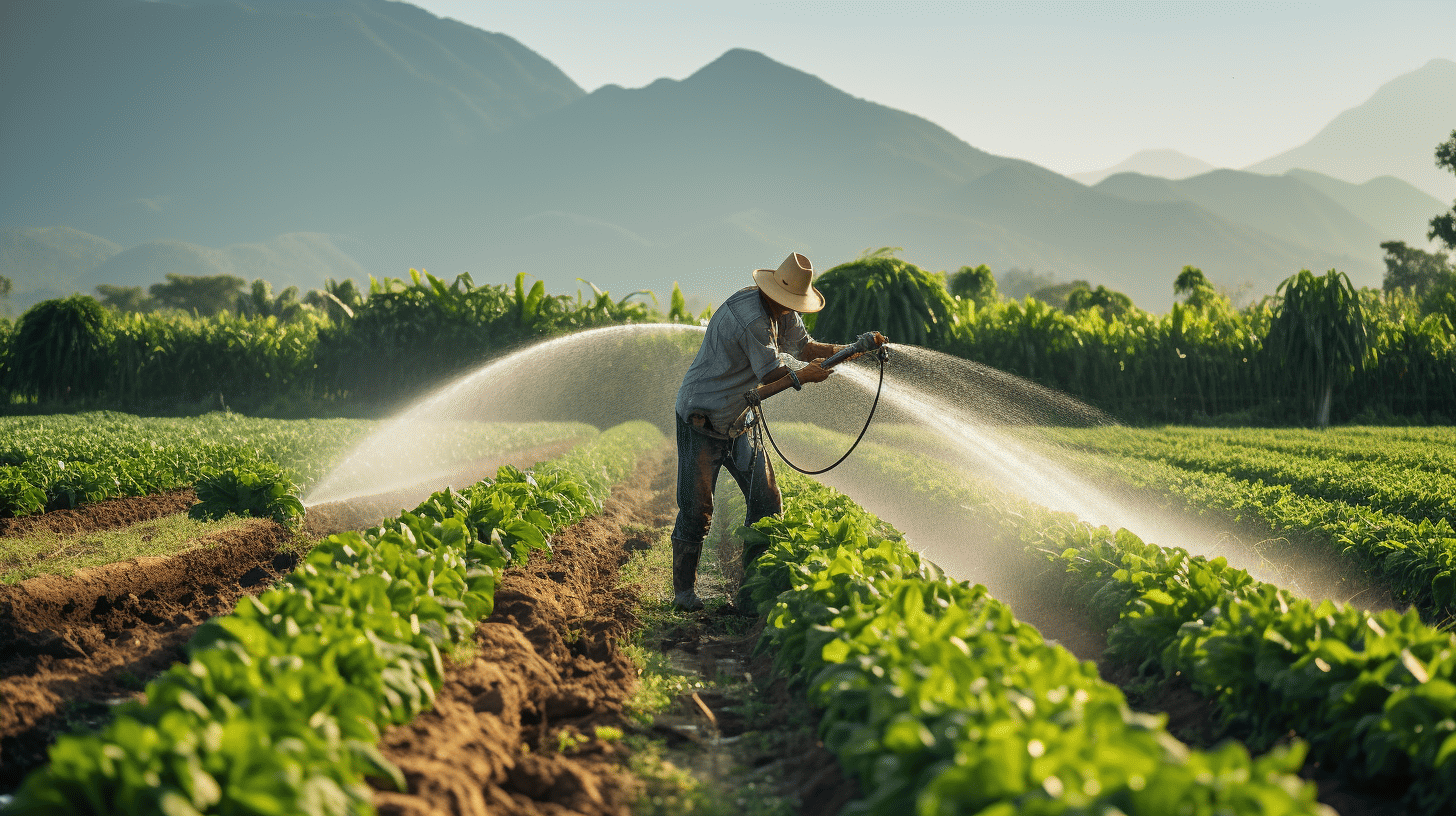
Sprinkler irrigation is a popular method that mimics rainfall by spraying water into the air. The water is then distributed across the field in a pattern that ensures uniform coverage. Consider the following facts about sprinkler irrigation:
- Suitable for various soil types and terrain.
- Uses overhead sprinklers to distribute water over the soil surface.
- Offers flexibility in application rates and patterns.
- Can be automated for precise control and scheduling.
- Widely used in larger fields, gardens, and landscapes.
Center Pivot Irrigation
Center pivot irrigation is a mechanized method commonly used in large-scale farming operations. It involves a circular field with a pivot point in the center, from which water is distributed through sprinklers attached to a long arm. Take note of the following details about center pivot irrigation:
- Suitable for large, open fields with low to moderate slopes.
- Employs a rotating pivot system to cover a circular area of the field.
- Allows for uniform water distribution and efficient coverage.
- Can be operated automatically for optimal water and energy usage.
- Frequently used for crops like corn, soybeans, and alfalfa.
In conclusion, each method of irrigation has its own advantages and considerations. Surface irrigation, drip irrigation, sprinkler irrigation, and center pivot irrigation all play vital roles in ensuring optimal water use and crop production. By understanding the characteristics and applications of each method, farmers can make informed choices to meet the specific needs of their crops and maximize water efficiency.
Sustainable Irrigation Practices
Crop Rotation
Crop rotation is a sustainable irrigation practice that involves alternating the type of crops grown in a specific area over a period of time. This technique offers several benefits, not only in terms of water conservation but also for soil health and pest control. Here are some key points to consider:
- Improved Water Efficiency: Different crops have varying water demands. By diversifying the crops grown in a field, farmers can optimize water usage, as certain plants require less water than others. This helps to minimize water waste and optimize irrigation scheduling.
- Enhanced Soil Health: Crop rotation helps to improve soil fertility and structure. Certain plants have the ability to replenish soil nutrients, reduce soil erosion, and suppress weeds. As a result, the soil retains moisture more effectively, reducing the need for excessive irrigation.
- Pest and Disease Control: Planting different crops in successive seasons can disrupt the life cycle of pests and diseases. This natural approach reduces the reliance on chemical pesticides, which can be harmful to the environment and human health.
Efficient Irrigation Systems
Investing in efficient irrigation systems is another crucial aspect of sustainable irrigation practices. These systems aim to deliver water directly to the plant roots, minimizing wastage and ensuring that crops receive the necessary amount of water for optimal growth. Here are a few key systems to consider:
- Drip Irrigation: This system delivers water slowly and directly to the roots of plants through a network of tubes or pipes with emitters. It reduces water loss due to evaporation and prevents run-off, making it highly efficient compared to traditional sprinklers or flood irrigation systems.
- Micro-Sprinklers: Micro-sprinklers are designed to deliver water in a fine mist, ensuring targeted irrigation with minimal water loss. They are particularly effective for orchards, vineyards, and gardens.
- Subsurface Irrigation: With this system, water is delivered directly underground, near the root zone of plants. It eliminates evaporation losses and reduces weed growth, making it an efficient option for row crops and landscapes.
Smart Irrigation Controllers
Smart irrigation controllers are innovative tools that help optimize irrigation practices and reduce water wastage. These controllers utilize real-time data and weather information to automatically adjust the irrigation schedule based on the specific needs of plants and the current environmental conditions. Here are a few features of smart irrigation controllers:
- Weather-Based Programming: Smart controllers use local weather data, such as temperature, humidity, and rainfall, to adjust irrigation schedules accordingly. This prevents unnecessary watering during rainy periods and optimizes irrigation during dry spells.
- Soil Moisture Sensors: These sensors measure the moisture content of the soil and provide accurate data to the controller. The controller then adjusts the irrigation schedule based on the actual moisture needs of the plants, preventing over- or underwatering.
- Remote Access: Many smart controllers can be accessed and controlled remotely via smartphone apps or web interfaces. This feature allows farmers to monitor and adjust the irrigation system from anywhere, saving time and ensuring efficient water management.
In conclusion, implementing sustainable irrigation practices is crucial for water conservation and environmentally friendly agriculture. By employing techniques such as crop rotation, investing in efficient irrigation systems, and utilizing smart controllers, farmers can minimize water waste, protect water resources, and contribute to a more sustainable future.
Effects of Irrigation on Soil Health
Irrigation is a vital practice in agriculture that allows farmers to provide water to their crops consistently. While irrigation plays a crucial role in crop production, it can also have both positive and negative effects on soil health. In this article, we will explore two key aspects of irrigation and their impact on soil: nutrient retention and soil erosion.
Nutrient Retention
One of the significant benefits of irrigation is its contribution to nutrient retention in the soil. When water is supplied in controlled amounts, it helps distribute essential nutrients more effectively, ultimately benefiting plant growth. Here are a few ways in which irrigation promotes nutrient retention:
- Enhanced nutrient availability: Regular irrigation ensures that water and nutrients are evenly distributed in the soil, making them readily available to plant roots. This accessibility is especially important in regions with unpredictable rainfall patterns or arid climates.
- Reduced leaching: Irrigation enables farmers to apply water directly to the root zone, allowing plants to uptake nutrients efficiently. This targeted watering approach minimizes the risk of nutrient leaching, where excess nutrients are washed away from the root zone, preventing contamination of water sources.
- Optimized nutrient uptake: Adequate irrigation improves soil moisture levels, creating an ideal environment for plants to absorb nutrients through their roots. This helps mitigate nutrient deficiencies and promotes healthier crop growth.
Incorporating irrigation practices that prioritize nutrient retention can significantly enhance soil health and contribute to sustainable agriculture.
Soil Erosion
While irrigation can have positive effects on soil nutrient retention, it can also contribute to soil erosion if not managed properly. Soil erosion occurs when water moves across the soil surface, carrying away valuable topsoil and degrading its quality. Here’s how irrigation can impact soil erosion:
- Over-irrigation: Excessive irrigation, beyond the water-holding capacity of the soil, can lead to water runoff. This runoff can cause erosion by carrying away loose soil particles, nutrients, and organic matter.
- Poor irrigation practices: Improper irrigation techniques such as using high-pressure sprinklers or applying water too quickly can create surface crusting, which makes the soil vulnerable to erosion. It is essential to use suitable irrigation methods that minimize soil disturbance and runoff.
- Lack of vegetation cover: Irrigation systems that are not adequately managed can create bare soil areas, especially between rows of crops. Without plant cover, the soil is more susceptible to erosion by wind or water.
To mitigate the negative effects of soil erosion caused by irrigation, farmers and land managers should adopt erosion control measures such as contour plowing, terracing, or planting cover crops. These practices help maintain soil structure, prevent runoff, and minimize erosion.
In summary, irrigation can either enhance or degrade soil health depending on its management. By implementing proper irrigation practices that optimize nutrient retention and minimize soil erosion, farmers can ensure the long-term productivity and health of their soil.
Explore more about the connection between soil health and irrigation practices in our comprehensive guide on Irrigation and Soil Health.
Irrigation Tips and Tricks
When it comes to keeping your garden healthy and thriving, proper irrigation is key. But with so many options and techniques available, how do you choose the right irrigation method for your needs? In this section, we will explore different irrigation methods and provide some valuable tips and tricks for maintaining an efficient and effective irrigation system.
Choosing the Right Irrigation Method
Selecting the right irrigation method for your garden is crucial to ensure optimal water distribution and minimize waste. Here are a few popular irrigation methods to consider:
- Sprinkler Irrigation: Sprinklers deliver water through a system of pipes and spray it over the desired area. This method is ideal for larger gardens or areas requiring even distribution of water.
- Drip Irrigation: Drip irrigation is a water-efficient method that delivers water directly to the roots of plants through a network of tubes or pipes with emitters. It’s perfect for watering individual plants or areas with limited water availability.
- Soaker Hoses: Soaker hoses are porous and allow water to slowly seep into the soil, delivering it directly to the roots. They are an excellent choice for garden beds, shrubs, and trees.
- Manual Watering: For small gardens or container plants, manual watering with a watering can or hose can be a simple and effective method. Just be mindful of consistent and thorough watering.
When choosing the right irrigation method, consider factors such as the size of your garden, the type of plants you have, and the availability of water resources. Experimenting with different techniques may help you find the most effective and efficient solution for your specific needs.
Maintenance Tips
Once you have set up your irrigation system, regular maintenance is essential to ensure its longevity and efficiency. Here are a few tips to keep in mind:
- Inspect and Clean: Regularly inspect your irrigation system for any clogs, leaks, or damage, and clean or replace any clogged or broken components.
- Adjust Sprinkler Heads: Check the direction and coverage of your sprinkler heads to ensure they are watering the intended areas and not wasting water on sidewalks or driveways.
- Monitor Water Pressure: Maintaining the correct water pressure is crucial for optimal performance. Use a pressure gauge to check and adjust your system as needed.
- Program Timer: If you have an automated system, make sure to program the timer correctly and adjust it according to seasonal changes in watering requirements.
- Mulch: Applying a layer of mulch around your plants helps retain moisture, reduces evaporation, and prevents weed growth, reducing the need for excessive watering.
Adapting to Climate Changes
Climate patterns can change over time, affecting the water availability and requirements in your garden. Here are a few tips to help you adapt to climate changes:
- Collect Rainwater: Installing a rainwater harvesting system allows you to collect and store rainwater for later use during dry periods.
- Adjust Watering Schedule: Be vigilant about monitoring weather forecasts and adjusting your watering schedule accordingly. Watering less during periods of rainfall can help conserve water.
- Group Plants with Similar Water Needs: Arrange your garden in a way that groups plants with similar water requirements together. This ensures efficient water usage and prevents overwatering or underwatering.
Remember, irrigation is a crucial aspect of gardening, and implementing these tips and tricks can help you ensure that your garden stays healthy and beautiful while conserving water resources. Choose the right irrigation method, maintain your system regularly, and adapt to climate changes for a thriving garden all year round.
Conclusion
In conclusion, understanding and implementing sustainable irrigation practices is crucial for farmers looking to optimize water usage, enhance crop productivity, and protect soil health. By adopting energy-saving irrigation techniques, such as drip irrigation or sprinkler irrigation, farmers can minimize water wastage and reduce their environmental impact. Additionally, the use of smart irrigation controllers allows for precision watering, ensuring that crops receive the right amount of water at the right time.
Furthermore, incorporating sustainable irrigation practices, like crop rotation, can mitigate nutrient depletion and improve soil health over time. This, in turn, leads to healthier plants and higher yield potential.
Adapting to climate changes is another essential aspect of sustainable irrigation. As weather patterns become increasingly unpredictable, farmers must be prepared to adjust their irrigation strategies accordingly. This may involve implementing water management systems that can monitor weather conditions and adjust irrigation schedules accordingly.
At Regenerative Agriculture Wiki, we believe in the power of sustainable farming practices and their potential to transform the agricultural landscape. Explore our platform to uncover a wealth of informative content on regenerative agriculture, including comprehensive guides, tips, and insights tailored to meet your interests. Join us in fostering a future where agriculture and ecology thrive in harmony.
Discover more about sustainable irrigation and other regenerative agriculture practices and take the first step towards a more sustainable and resilient farm.
Frequently Asked Questions
- What are some sustainable irrigation techniques for farmers?
Some sustainable irrigation techniques for farmers include drip irrigation, rainwater harvesting, micro-sprinklers, soil moisture sensors, and using mulch to retain soil moisture.
- How can farmers reduce water wastage in irrigation?
Farmers can reduce water wastage in irrigation by using efficient irrigation systems, implementing proper scheduling, regularly maintaining and repairing equipment, and practicing precision agriculture techniques.
- What are the benefits of sustainable irrigation practices?
Sustainable irrigation practices help conserve water resources, reduce energy consumption, minimize soil erosion, improve crop yield and quality, and promote long-term environmental sustainability.
- Are there any government programs or incentives for farmers to adopt sustainable irrigation practices?
Yes, several government programs and incentives exist to encourage farmers to adopt sustainable irrigation practices. These may include grants, subsidies, tax incentives, and technical assistance programs specific to water conservation in agriculture.
- How can farmers determine the appropriate irrigation schedule for their crops?
Farmers can determine the appropriate irrigation schedule for their crops by considering factors such as plant water requirements, soil moisture levels, weather conditions, and the stage of crop growth. They can also use soil moisture sensors or consult agricultural experts for guidance.